How Moviegoing Came Home From the Picture Palace
Trace how moviegoing came home through broadcast television, rental video, and discs—and see how each change reshaped the audience’s control of film nights.
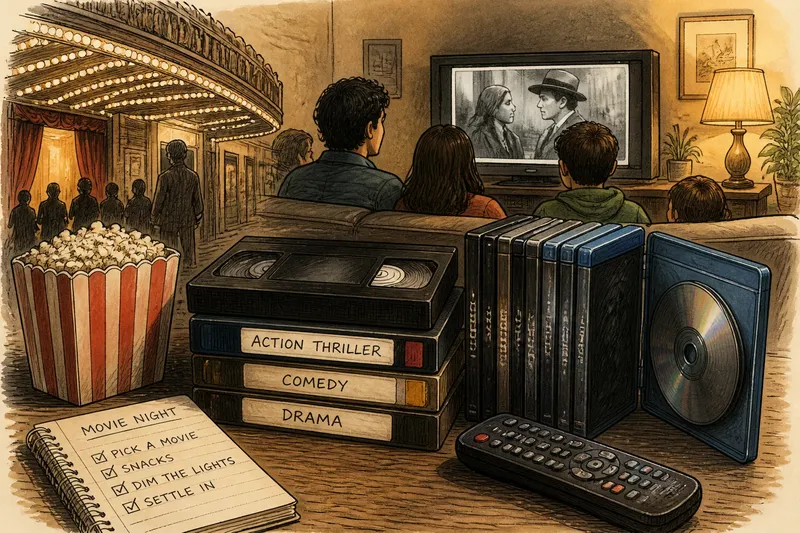
The common mistake in telling how moviegoing came home is to treat the living room as a smaller cinema. Television broadcasts, rental video, and home video discs changed not only where people watched but who chose the film and when it began. Each technology added a different kind of access, while theaters continued to offer a scheduled public gathering.
What made the picture palace a public ritual?
Going to the movies meant leaving home for a venue built around collective attention. The outing began with getting there and finding a seat, and it often continued with conversation afterward. In the auditorium, laughter, silence, and restlessness became part of the experience because strangers were responding together.
The theater also set the schedule. A viewer chose from films playing at a particular venue and time, then watched according to the house’s rules. A ticket placed the audience inside a public occasion, not just in front of a story.
The outing started before the lights went down.
How did television bring films into the home?
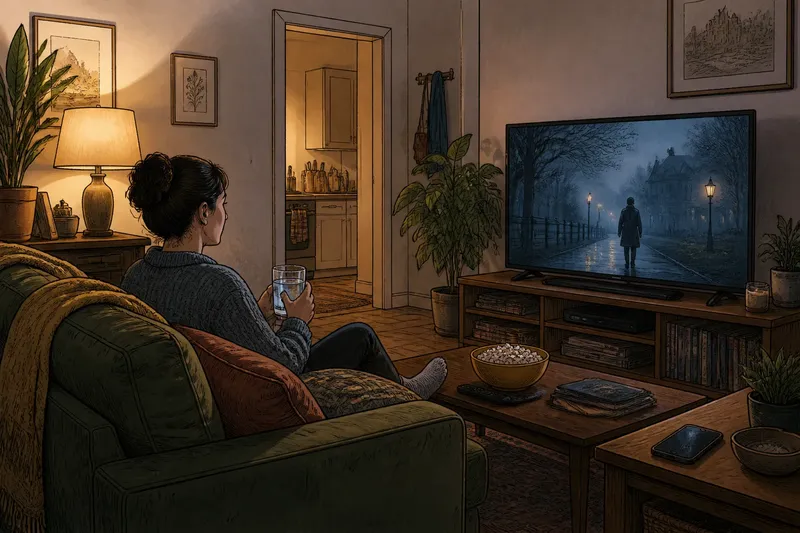
Television made moving images a regular feature of domestic life. In the United States, network television began carrying feature films in the 1950s, though access and habits varied by household and region. A broadcast brought a film into the home on a schedule set by a station or network. Viewers could stay in their own rooms, but they did not yet have the same control over timing that later formats offered.
Television also placed movies among other household activities and programs. A family might gather around a set, but the living room remained a room where people could talk, leave, or attend to something else. The screen was domestic; the broadcast schedule still belonged to someone outside the household.
What changed with videotape and rental stores?
Videocassette recorders and prerecorded tapes brought a different kind of choice. A household could record a broadcast to watch later or rent a tape from a video store. Rental shops such as Blockbuster, founded in Dallas in 1985, made selecting a title from shelves a recognizable part of the evening’s plan.
The choice moved closer to home, but it had limits. The family still depended on which titles a store stocked, whether a copy was available, and the shop’s return rules. Even so, a tape could be paused, rewound, or watched again without waiting for a broadcast to repeat.
Say you have a rented videocassette and a household that wants to watch after dinner. One person checks the label and confirms the tape is the intended film; another sets the VCR to the correct input. They press play, pause when a phone rings, then rewind to a scene someone missed. The result is a screening shaped by the household’s timing, though the store’s selection and return deadline still frame the choice.
How did DVDs and discs alter home moviegoing?
DVDs reached the U.S. market in the late 1990s, offering another physical format for watching films at home. Discs were easy to store compared with a shelf of bulky cassette cases, and their menus could provide chapters and supplementary material. A viewer could select a scene or revisit one without winding tape through the machine.
DVD rental and sales expanded the home collection, while the household still chose when to watch. Later, Blu-ray offered a higher-definition disc format, and streaming services shifted many choices from physical shelves to online catalogs. These formats did not erase the earlier ones at once; households adopted them unevenly, and physical media remained part of home viewing.
What changes when a film is watched at home?
At home, attention is negotiable. A viewer can pause for a call, rewind a confusing scene, or stop for the night. These options can make a film easier to fit into daily life, but they also mean that viewers may not share one uninterrupted stretch of attention.
Household viewing places a film among existing relationships and routines. Someone may explain a reference to a child or talk over a scene because conversation is normal in that room. The film matters, but it shares the setting with the people watching.
Why doesn’t the living room replace the theater?
A theater makes a film a public occasion: strangers gather at a set time and follow shared rules of attention. A living room lets a household choose its own pace and expectations. Neither setting is simply better; each creates a different kind of audience.
The distinction matters even when the same film appears in both places. A theater gathers people who may have no other connection, while a household screening takes place among people who already know one another. The first can create a temporary public; the second folds the film into private relationships.
What do readers ask about moviegoing at home?
When did watching movies at home become common?
There was no single turning point. Television brought scheduled feature films into U.S. homes from the 1950s, while videotape, rental shops, discs, and later streaming added more control over selection and timing. Adoption varied among households, so the history is a sequence of changes rather than one date.
Did home video end the cinema outing?
No. The formats offered different ways to watch, and theaters continued to provide a scheduled public screening. Home viewing changed the available choices without making the two settings interchangeable.
What did videotape add that television broadcasts did not?
A videocassette could be rented or recorded and played at a household’s chosen time. Viewers could pause and rewind it, though the selection depended on what was available through a store or recording.
Why do older moviegoing customs still matter?
They show how a film’s setting shapes the audience’s experience. A theater’s shared silence and a household’s interruptions can make the same film feel like different kinds of events.
What does the shift from picture palace to living room reveal?
The history of moviegoing coming home is a history of changing control. Television brought films into domestic rooms but kept the schedule in the hands of broadcasters. Videotape, DVDs, and later streaming gave households more say over selection and timing, while each format retained its own limits.
That shift did not make the living room a replica of the picture palace. It gave film culture another setting, one shaped by household choices, familiar company, and the option to pause. The useful distinction is not simply public versus private: it is who sets the time, chooses the film, and decides how the room will watch.