Why the Room Changes a Film Night
Why the room changes a film night: small choices about light, seating, interruptions, and setup can make it easier to settle into a movie.
The most common mistake on a film night is treating the room as neutral: press play, then hope attention will take care of itself. A bright lamp reflected in the screen, a chair angled away from it, or a phone within easy reach can keep pulling you out of the film. The room does not need to resemble a cinema. It needs to make watching feel like the easiest thing to do.
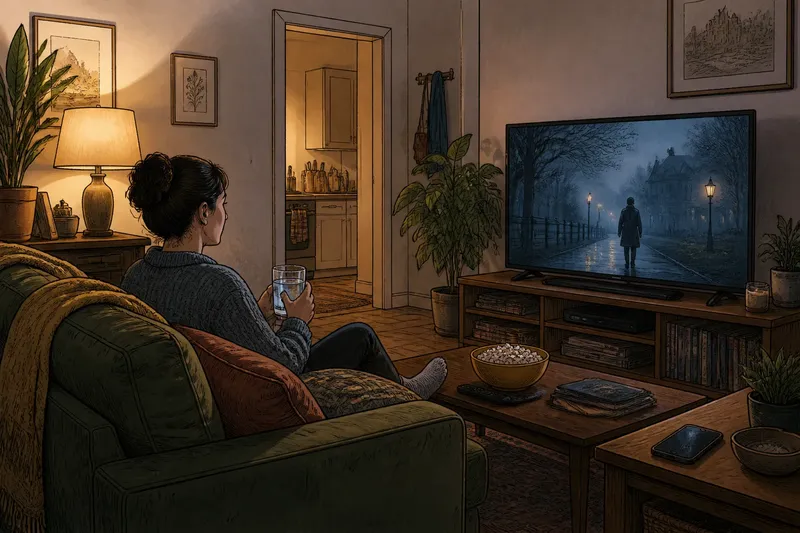
Imagine that Maya plans to watch a quiet mystery in her apartment after dinner. Her television sits across from a sofa, but the overhead light shines on the screen, the sofa faces slightly toward the kitchen, and her phone rests beside her. She changes a few ordinary things before starting. The result is not a perfect screening room; it is a space where the film has a better chance of holding her attention.
Why does the room change a film night?
Watching asks for more than looking at a screen. You follow faces, shifts in sound, and small details that may matter later. Each interruption makes you reorient: locate the scene, recall what was happening, and settle again. A room that reduces needless distractions can make that return less frequent.
This is not a claim that ideal conditions transform a film or that every viewer needs silence. Some people like a lamp on, a blanket, or a running conversation. The useful question is whether the room supports the kind of attention this particular film invites. A fast comedy may tolerate more movement than a hushed drama, but a reflection across the image can bother either one.
For Maya, the goal is modest. She wants to stop noticing the room once the opening scene begins. That means looking for small sources of friction, rather than buying equipment or rearranging the whole apartment.
What should Maya notice before pressing play?
She starts by sitting where she expects to watch. From the sofa, the overhead light leaves a pale sheen across the screen. The kitchen doorway is also in her direct line of sight, and the sofa’s angle makes turning toward it feel natural. None of these details is a flaw in the room. Together, they offer her attention several exits.
Light is the easiest thing to assess from the viewing seat. A bright source behind or beside the viewer can be comfortable, while a bulb reflected in the display competes with the image. Closing a curtain may help with daylight; switching off the overhead fixture may be enough at night. A small lamp placed out of the screen’s reflection can preserve a sense of the room without washing out the picture.
Seating shapes attention in a quieter way. A seat that faces the screen lets the viewer settle without holding an awkward posture. If the only comfortable chair is at an angle, turning it slightly may matter more than changing the display. A cushion or folded blanket can also help someone stay put, if it is already to hand.
Interruptions need a different kind of adjustment. A phone that lights up on the coffee table, a delivery alert, or a pet’s usual route through the room can draw attention even when no one intended to disrupt the film. Maya cannot control every interruption, and she does not try. She puts her phone beyond arm’s reach and tells her roommate she is starting a movie, leaving the door open for anything that genuinely needs attention.
Before changing anything, identify what catches your eye or pulls you away from the story.
How does Maya make the room feel ready?
Maya first turns off the overhead light and tests the screen from her seat. The reflection disappears, but the room feels too dark for her liking. She switches on a shaded table lamp behind the sofa, then checks the screen again. Its light gives the room a softer edge without appearing as a bright patch in the image.
Next, she shifts the sofa cushion and moves a footstool out of the path to the kitchen. She is not trying to arrange the furniture by a technical formula. She wants a comfortable position that faces the film and does not invite her to keep glancing toward the doorway. Her roommate is still able to pass through the room if needed.
Finally, Maya takes her phone to the entry table and fills a glass of water. This is a small preparation, not a rule against pausing. It simply removes two predictable reasons to stand up during the film. She keeps the remote nearby, along with the subtitle setting she prefers, so she will not have to search through menus once the story is underway.
These changes take little effort because they use the room she already has. If one adjustment makes the room less comfortable, she can undo it. The point is to find a workable arrangement, not to comply with a standard for how movie watching should look.
What makes a viewing setup useful rather than elaborate?
A useful setup answers a few practical questions. Can you see the image without a reflection? Is your seat comfortable enough for the film’s expected length? Is sound clear at a level that suits the room and anyone else in it? Can you reach the controls without turning preparation into a second activity?
The screen itself may be a television, a laptop, or a projector. Each asks for slightly different choices. A laptop can be moved away from a bright window; a projector may need a clear wall and less stray light; a television can often stay where it is while the lamp changes position. There is no need to imitate a theater if the screen and room already make the film easy to follow.
Sound deserves attention, but not necessarily new speakers. Maya checks that dialogue is clear from the sofa and lowers the volume enough to keep it comfortable for the neighboring apartment. If the film has subtitles, she makes sure they are easy to read from her seat. The useful setup is the one that serves the people in the room, not the one with the most equipment.
For a film night, think first about the seat and the screen, then adjust whatever competes with either.
What questions help you adjust a room for a film night?
Should the room be completely dark?
No. Some viewers prefer a little ambient light, and a dim lamp can make the room more comfortable. The practical test is whether the light reflects on the screen or makes the picture harder to see from the seat.
Does the screen need to be large?
Not necessarily. A screen that lets you follow faces, subtitles, and important visual details from your usual seat can serve the film well. The room’s layout and viewing distance matter more to comfort than an impressive display in isolation.
Should I put my phone away?
Only if it tends to pull you out of the film. Placing it face down or beyond arm’s reach can reduce glances, while keeping it available may make sense if you are expecting an important message.
What if other people in the room want to talk?
Agree on a loose expectation before the film starts, such as saving conversation for pauses or choosing something everyone is happy to watch casually. A shared room does not need to become silent; it helps when nobody has to guess what kind of attention the evening calls for.
What does Maya learn from the first scene?
Once the mystery starts, Maya notices that she is watching the screen instead of the kitchen doorway. The lamp is present but no longer conspicuous. She settles into the sofa, and the phone’s absence from the coffee table means she does not check it by habit. These are observable changes in the room and her behavior, not proof that every film needs the same arrangement.
Her roommate still crosses the room to get a book. Maya pauses, then returns to the scene. The interruption is brief because the space has not been organized around a fantasy of perfect silence. A useful film night has room for ordinary life; its setup simply makes avoidable distractions less likely.
Later, Maya realizes the seating angle was the most important adjustment for her, while someone else might care more about reflections or sound. That is why a short check from the place you will actually sit is more valuable than copying a home-cinema arrangement from a photo. The same room can also call for different choices on another evening: a brightly lit comedy with friends and a visually subtle film alone do not ask for identical conditions.
Why the room changes a film night is often a matter of small, personal cues: what catches the eye, what invites a glance away, and what makes sitting still comfortable. Start with one thing you notice from your seat. Move a lamp, turn the chair, or set the phone aside, then leave the rest of the room alone if it already works. A film night can feel ready without the room becoming a project.